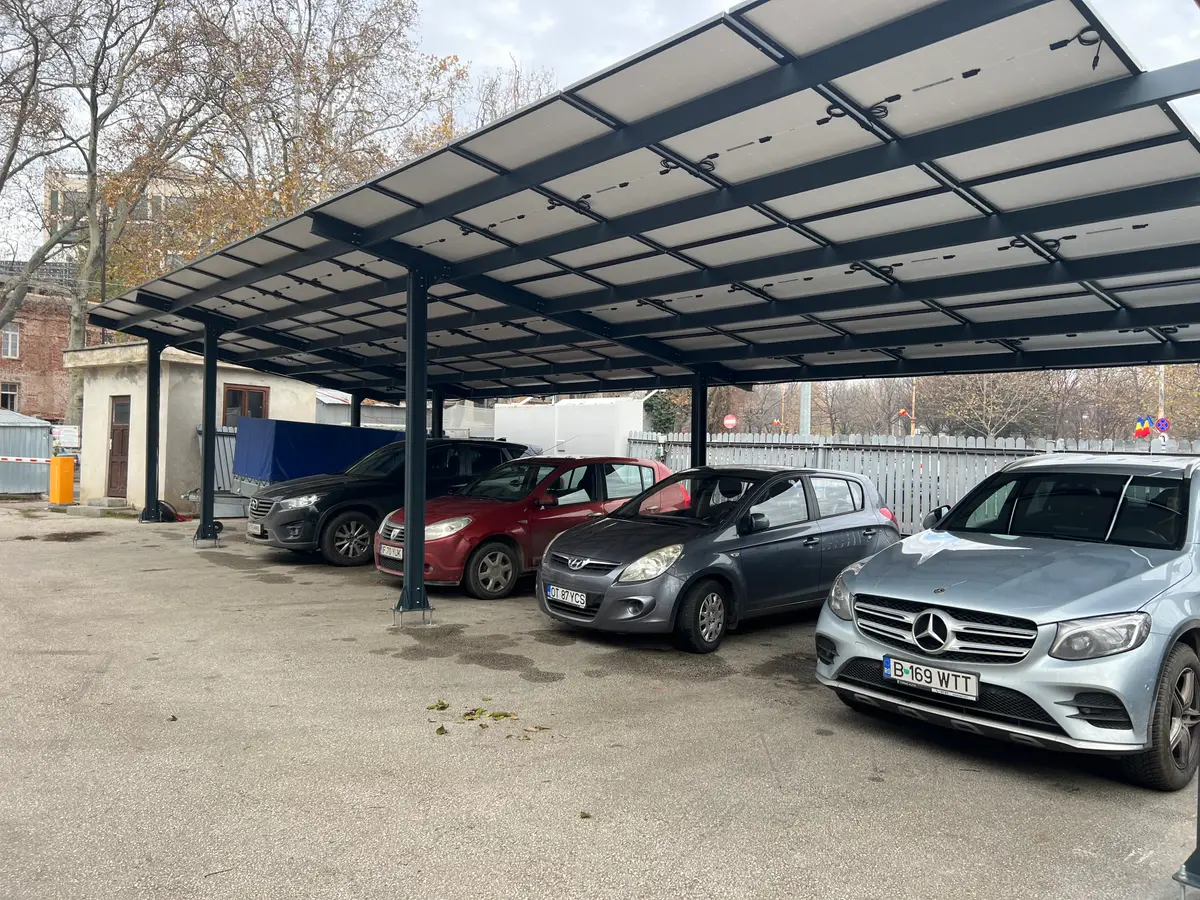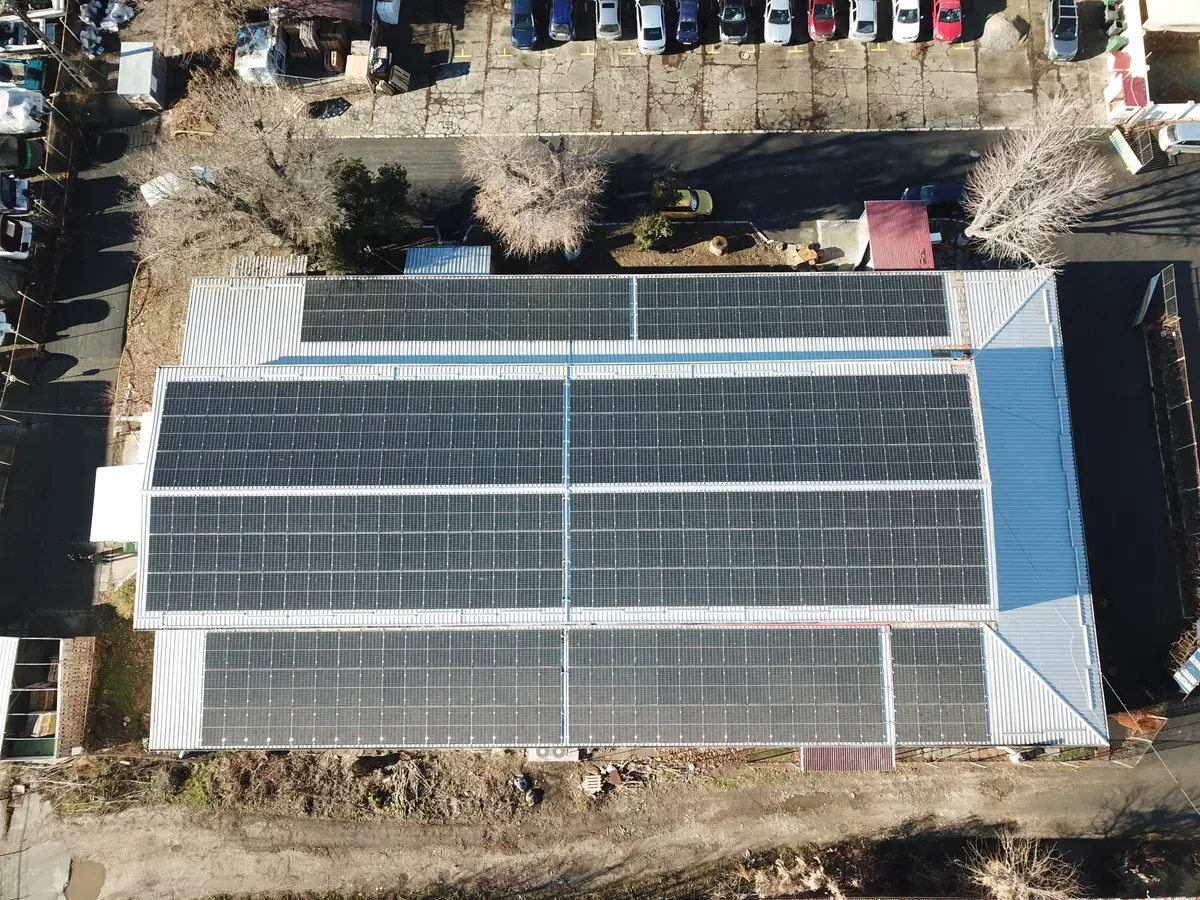

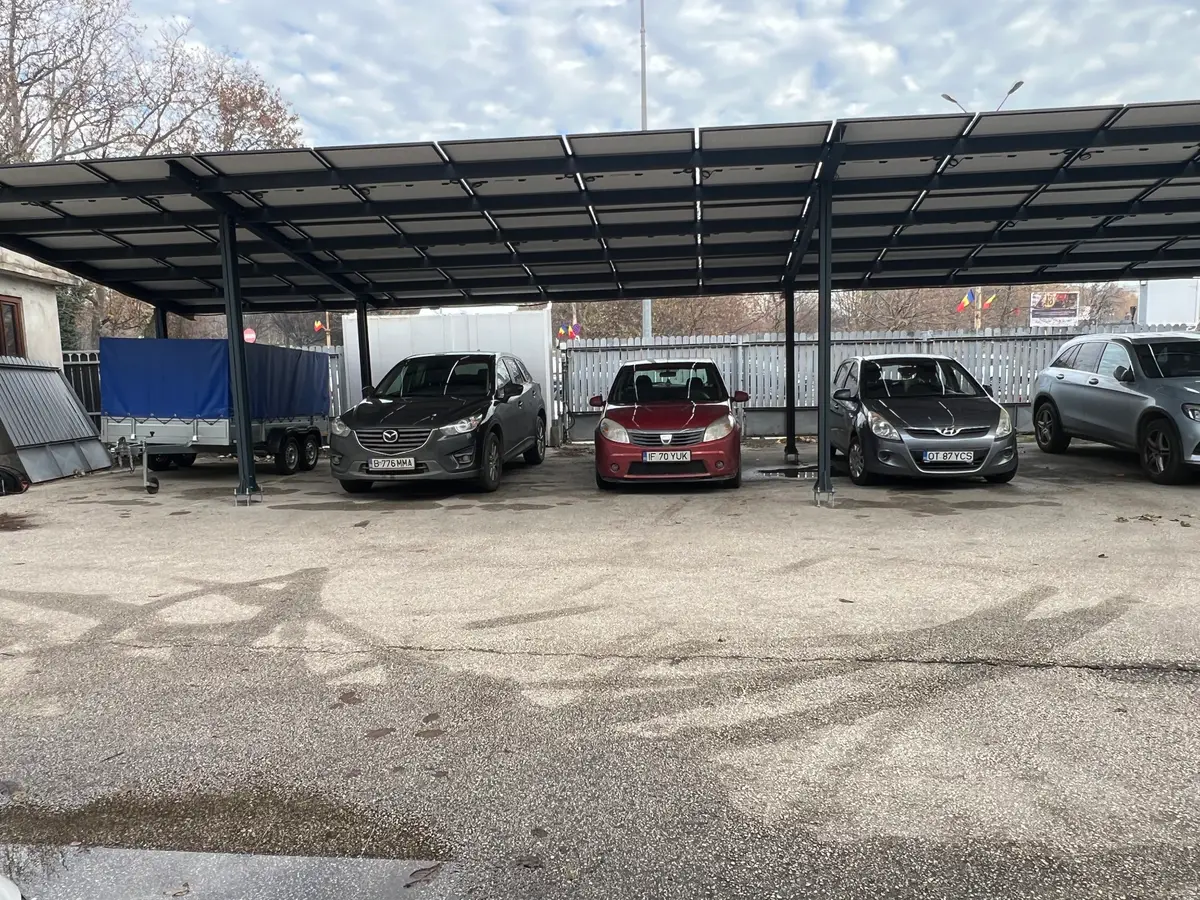
For a company with a hall and a car park, the choice is not always "either–or". The roof can be the simplest solution for installed capacity, while a carport brings extra benefits: protection for vehicles, charging infrastructure and the use of space that would otherwise be unproductive.
When the roof has the advantage
If the structure is suitable and the cable routes are reasonable, the roof can avoid a new support structure with foundations. However, structural conditions, safety zones, existing installations and access for maintenance must be checked before assuming it is the lowest-cost solution.
When a carport is worth analysing
A carport can be relevant for commercial and logistics car parks and for company headquarters with electric fleets. Its value is not only the energy produced: it can add to the experience of customers or employees and to mobility infrastructure. On the other hand, the structure, foundations, clearance height, manoeuvring and drainage affect costs.
The role of charging stations
Do not assume that every kWh produced by the carport goes straight into the cars. Solar energy and vehicle arrivals have their own schedules. Good integration includes control of charging power and coordination with the electrical limit of the site.
Three scenarios to analyse
- The roof alone, sized for existing self-consumption.
- A carport with or without charging stations, sized for the available space.
- A combined configuration, with energy management and possibly storage.
The final criterion is not the maximum number of panels, but the combination of energy, functionality, investment and the future development of the site.